
Cabinet Care
Protecting Your Cabinets from Heat, Steam & Moisture
Steam, spills, and Wisconsin humidity are what wear cabinetry out fastest. Simple habits that keep yours solid.
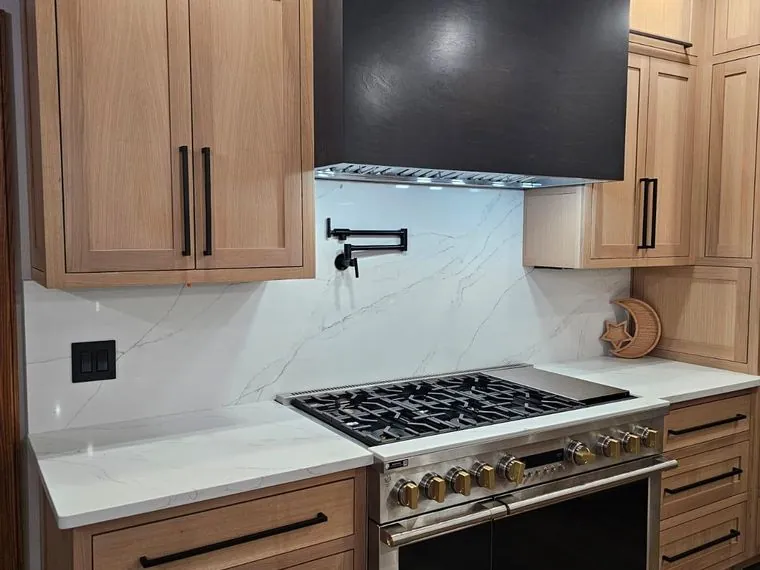
Most of the cabinet damage we see has nothing to do with age. It's moisture that had nowhere to go. A swollen toe kick under the sink. Bubbled finish above the dishwasher. A warped door in a steamy bathroom. None of that happens overnight. It builds up slowly, from habits nobody ever thought twice about.
The good news is that it's almost entirely preventable. Wood and moisture don't mix well, but a handful of consistent habits keep your cabinets doing their job for years.
The three real enemies
What actually wears cabinetry down comes down to three things: steam, standing water, and heat. Each shows up in different rooms and causes different kinds of damage. The fix for all three is basically the same: don't let moisture sit against the wood.
Steam
Steam is sneaky because it doesn't look like a spill. Hot, wet air condenses on cool cabinet surfaces the same way it fogs a bathroom mirror. In most kitchens, the dishwasher is the biggest culprit. Pop the door open right at the end of a cycle and you send a wall of steam straight up into the cabinets above and beside it. That's why finish bubbling or wood swelling tends to show up around a dishwasher years before it shows up anywhere else in the kitchen. Let the cycle finish and the unit cool for a few minutes before cracking the door, or use the vented dry setting if your dishwasher has one.
Cooking makes steam too, especially anything boiling or simmering for a while. Run your range hood while you cook and it pulls that moisture and heat up and out instead of letting it drift into nearby cabinets.
Standing water
Under the sink is the highest-risk spot in any kitchen or bath. Water, cabinetry, and plumbing connections all meet in a tight space there. A slow drip you never notice can sit against the cabinet floor for weeks. A rubber or vinyl shelf liner, or just a simple tray under your cleaning supplies and trash can, catches drips before they reach the wood. Pull everything out once or twice a year and check the plumbing connections for dampness, mineral crusting, or soft spots in the cabinet floor. Catch a slow leak early and it's a five-minute fix. Catch it late and you might be rebuilding a cabinet base.
At the sink itself, get in the habit of wiping down the counter and the top edge of the cabinet after doing dishes. Water that pools at that seam is exactly where it works its way into the wood over time.
Heat
Heat on its own is less dramatic than steam or standing water, but it still does damage. Cabinets right next to a range or oven go through more heat cycling than anywhere else in the kitchen, and that constant expansion and contraction is hard on both the wood and the finish. It's part of why we think carefully about materials and finish near heat sources when we design a kitchen. See our guide to cabinet materials and finishes for more on how those choices hold up in real kitchens.
Bathrooms: a moisture problem by design
Bathrooms are the toughest environment cabinetry has to live in. Showers and baths dump moisture into the air several times a day, usually in a room smaller and less ventilated than a kitchen. A vanity has to shrug that off day after day.
The single best habit is running the exhaust fan during and after every shower or bath, and leaving it on for fifteen to twenty minutes afterward so it actually clears the humidity instead of just masking it. Wipe down the vanity top and any splashes on the cabinet face while you're in there anyway. It takes seconds and keeps water from sitting against the finish. If your vanity sits close to the tub or shower, a little extra airflow, cracking the door or running a small fan, helps a lot on the days condensation is heaviest.
This is also why finish quality matters so much for bathroom vanities. A properly sealed finish is the barrier standing between the wood and the moisture in the air. We build with that environment in mind from the start, not as an afterthought.
A Wisconsin note: our winters run dry from forced-air heat, and our summers run humid. That swing means the wood in your cabinetry is naturally expanding and contracting a little through the year. You might notice a door fit slightly differently in January than in July. That's normal wood movement, not a defect. Keeping indoor humidity relatively stable, a humidifier in winter, AC or a dehumidifier in summer, softens the swing. But some seasonal movement is just part of owning real wood cabinetry.
Why construction quality is the real safeguard
Habits only go so far if the cabinetry itself wasn't built to handle moisture in the first place. Plywood cabinet boxes are far more dimensionally stable than particleboard. They don't swell and delaminate the way particleboard does when it gets damp, which matters most exactly where water shows up most: sink bases, dishwasher surrounds, and bathroom vanities. Pair that with a properly sealed, catalyzed finish that actually resists water instead of just looking good on day one, and you've got cabinetry that can take the occasional splash, spill, or steam cloud without it turning into a real problem.
That's the standard we build to. If you're planning a new kitchen or bath and want cabinetry built for how a home actually gets used, steam, spills, and all, we'd be glad to walk through it with you.
Frequently asked questions
Is steam bad for kitchen cabinets?
Yes, over time. Steam condenses on cool cabinet surfaces the same way it fogs a mirror, and repeated exposure, especially right above or beside a dishwasher, can eventually bubble the finish or swell the wood underneath. Running your range hood while cooking and letting the dishwasher cool before opening it are the two easiest ways to cut down on steam exposure.
How do I protect cabinets around the dishwasher?
Let the cycle finish and give the unit a few minutes to cool before opening the door, since that first burst of steam is the most concentrated. If your dishwasher has a vented or fan-assisted dry setting, use it. That pulls moisture out through the appliance instead of releasing it into the surrounding cabinets. It's also worth periodically checking the cabinet directly above and beside the dishwasher for any early bubbling or softness in the finish.
What holds up best in a humid bathroom?
Cabinetry built with a plywood box and a properly sealed, catalyzed finish handles bathroom humidity far better than particleboard construction or a thin, unsealed finish. On the habit side, running the exhaust fan during and after every shower and wiping down the vanity when you notice splashes keeps day-to-day moisture from turning into a long-term problem.
Let's talk
Built to handle real life.
We build cabinetry with moisture in mind — plywood boxes, sealed finishes. Let’s plan yours.