
Cabinet Care
Caring for Painted vs. Stained Cabinet Finishes
The two finishes age differently and need different care. Here's how to keep each looking its best.
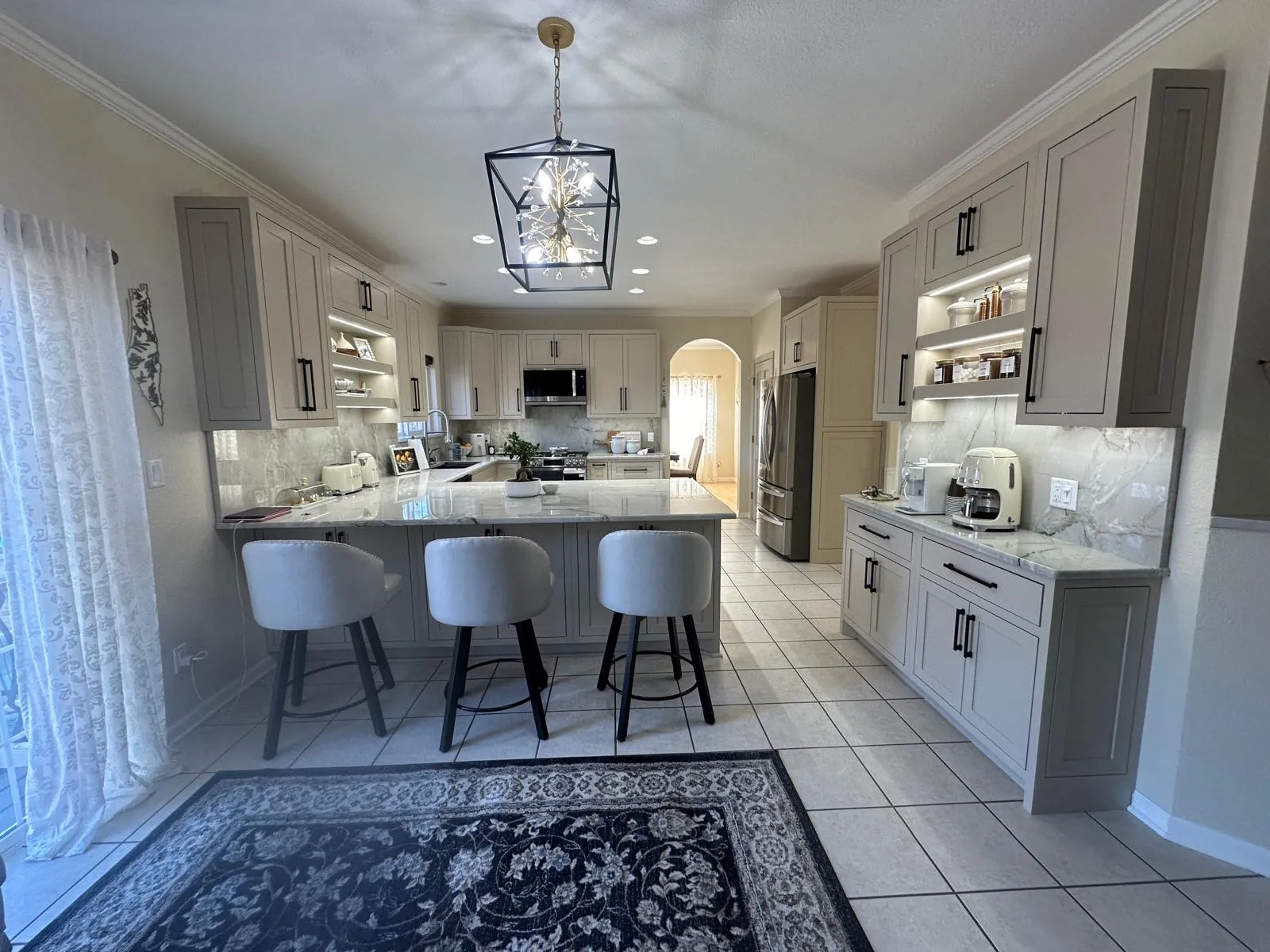
Once the cabinets are in and the sawdust has settled, the question changes. It's no longer "what should I build?" It's "how do I keep this looking like day one?" A lot of the answer depends on whether you went with a painted finish or a stained, natural-wood finish. They age differently, show wear differently, and want slightly different care. Neither one is high-maintenance, but knowing what's normal and what's worth a phone call will save you some worry either way.
How painted finishes behave over time
Painted cabinetry gives you a smooth, consistent color across every door and drawer front. That's part of why so many people pick it for kitchens they want to feel clean and cohesive.
What's normal to see over time:
- Fine settling lines at panel joints. Doors are built from wood components underneath the paint, and wood expands and contracts with the seasons. As it moves, even slightly, you can sometimes see a faint hairline where a panel meets its frame. This is normal seasonal movement, not a construction flaw, and it shows up more in the driest months of a Wisconsin winter when indoor humidity drops.
- Edge and corner chips. Paint is a coating, and coatings take the most abuse at edges, corners, and anywhere metal or hard objects make contact: a dropped pan, a barstool swung around, a dog collar at the toe-kick. A chip shows up as a small bright or dark spot where the substrate underneath is exposed.
Neither of these means something is wrong with your cabinets. It's just how a painted, wood-based product lives in a real home.
Caring for painted cabinets day to day
Painted finishes reward a gentle touch:
- Clean, don't scrub. A soft microfiber cloth, warm water, and a drop of mild dish soap handles almost everything: fingerprints, cooking splatter, everyday grime. Wipe, then dry with a second clean cloth so water doesn't sit in corners or along the edges of doors.
- Blot spills instead of wiping hard. For anything sticky or greasy, blot first to lift the bulk of it, then follow with your damp cloth. Aggressive wiping on a stubborn spot is often what turns a small mark into a scuff.
- Skip anything abrasive. No scouring pads, no melamine "magic eraser" sponges, no all-purpose degreasers, no ammonia or bleach-based cleaners. These are harder on paint than they look. They can dull the sheen or wear a thin spot in the finish faster than normal use ever would.
- Keep a small touch-up kit on hand. Many painted-cabinet clients keep a bit of matching touch-up paint (ask your builder about this when the project wraps) for tiny nicks. A dab applied early, on a clean and dry chip, blends in far better than paint applied later over grime or old wax buildup.
- Address chips early. A fresh chip is a quick, low-drama touch-up. Left alone, exposed substrate can pick up moisture or discoloration, which makes the eventual fix more noticeable. If a chip is larger than a pinhead or sits somewhere highly visible, call rather than attempt a DIY fix.
How stained and natural wood finishes behave over time
Stained cabinetry works differently because you're seeing the wood itself, grain and color variation included, through a protective topcoat. That grain does a lot of quiet work for you.
- Grain hides minor wear. Small dings, faint scuffs, and light scratches tend to disappear into the natural variation of the wood instead of standing out the way they would against a flat painted color. This is one reason families with young kids or big dogs often lean stained.
- It ages gracefully. Real wood tends to develop a slightly deeper, richer look over years of handling and light exposure, often described as the wood "warming up." That's different from damage; it's just what natural wood does.
- It can be refreshed. Because you're dealing with real wood under a topcoat rather than a thin painted layer, stained cabinetry generally has more room for sanding and refinishing down the road if you want to restore or update the look. A painted or thermofoil door, by contrast, often means replacement once it's damaged.
Caring for stained cabinets day to day
- Mild cleaning is still the rule. Warm water, a soft cloth, and a small amount of mild dish soap when needed. Dry promptly. Standing water is the enemy of any wood finish, painted or stained, because it can dull the topcoat or work its way into seams over time.
- Occasional wood-friendly conditioning, where appropriate. Some stained finishes benefit from an occasional light conditioning product made specifically for finished wood cabinetry. Ask your builder what's right for your specific topcoat, since not every finish needs or wants this. More isn't better here; over-conditioning can leave a waxy buildup that attracts dust and grime.
- Watch for sun fading. Stained wood, like any natural material, can shift subtly in color with prolonged direct sunlight, most noticeable on an island end panel or a door right beside a sunny window. Rotating window treatments or a UV-filtering film on the glass can slow this if it's a concern in your kitchen.
- Skip the same abrasives you'd skip on paint. Scouring pads, ammonia, bleach, and heavy degreasers are just as hard on a stained topcoat as they are on paint. Avoid them here too.
A Wisconsin-specific note: our humidity swings hard between a damp summer and a dry, heated winter. Some seasonal wood movement — a door that feels a hair snugger in July, a faint line at a panel joint in January — is normal for both painted and stained cabinetry built from real wood components. A whole-home humidifier in winter and reasonable indoor humidity control year-round go a long way toward minimizing it, but a little movement isn't a defect to worry over.
Touch-ups you can do yourself vs. when to call a pro
Small, everyday things are fair game for a homeowner: wiping spills promptly, gentle cleaning, dabbing a tiny matched touch-up paint on a fresh pinhead chip, or applying a wood-safe conditioner sparingly on a stained finish. These take minutes and keep small issues from growing.
Call a professional when you're looking at a chip or scratch larger than a pinhead, damage in a highly visible spot like an island face, a persistent line or gap that seems to be widening rather than staying put, or any water damage from a leak. Guessing with the wrong product, or a DIY fix that doesn't match sheen and color, can end up costing more to correct than the original issue. For the full day-to-day cleaning routine, including what to use on hardware, glass inserts, and interiors, see our guide on how to clean and care for your cabinets. And if you're still deciding between a painted or stained look for an upcoming project, our breakdown of cabinet materials and finishes that last in Wisconsin kitchens walks through how substrate and finish work together.
If something on your current cabinetry doesn't look right, or you're planning ahead for a new kitchen or vanity and want a finish that'll fit how your household actually lives, reach out and let's talk it through. We're happy to look at photos or walk your space in person.
Frequently asked questions
Do painted cabinets chip easily?
Not under normal use. A properly applied paint finish on the right substrate holds up well to everyday cooking, cleaning, and daily handling. Chips happen mainly from hard impacts at edges and corners — a dropped pan, a bumped stool, a pet collar at the toe-kick — the same spots that would show wear on any painted surface in a busy home.
Can I touch up painted cabinets myself?
For small nicks, yes. If you have matching touch-up paint on hand (worth asking your builder for at project completion), a light dab on a clean, dry chip blends in well, especially if you catch it early. For anything larger than a pinhead, damage in a highly visible spot, or a repair you're unsure about, call a professional rather than risk a mismatched patch.
Are stained cabinets easier to maintain?
They're comparably easy to maintain, just different. Stained finishes have an edge in hiding minor scuffs and dings within the natural wood grain, and they generally have more room for future sanding and refinishing if you want to restore the look years down the road. Both painted and stained cabinets need the same gentle cleaning approach and the same avoidance of harsh, abrasive products.
Let's talk
Choose a finish you'll love for years.
We'll help you pick a finish matched to your style and how your family lives. Free consultation.