
Design Guide
Cabinet Hardware Guide: Knobs, Pulls, Handles & Hinges
Hardware is the jewelry of a kitchen. How to choose knobs, pulls, and hinges for a look that feels finished.
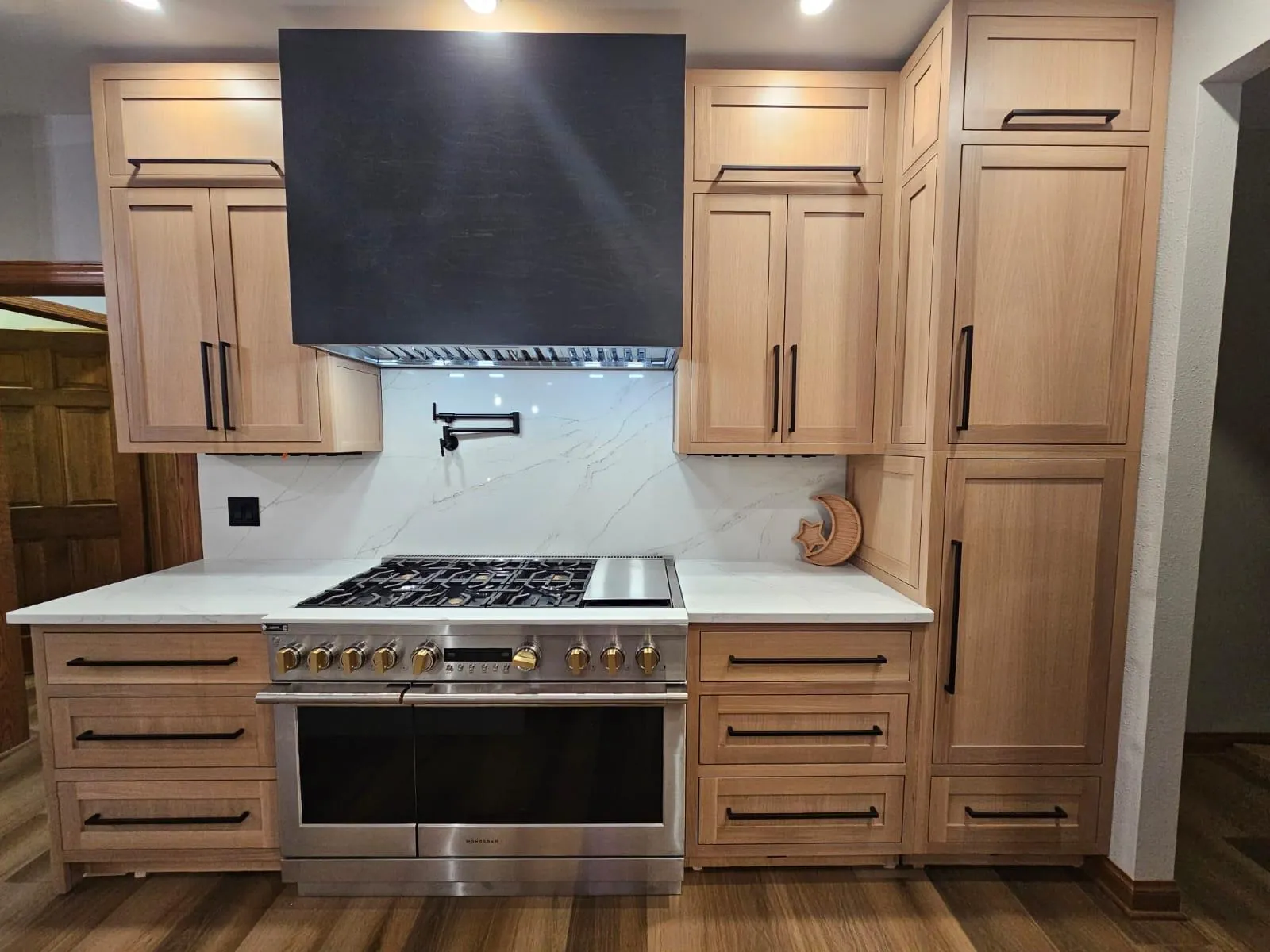
Cabinets set the shape of a kitchen. Hardware sets the mood. Swap a plain knob for a slim brass bar pull and the whole room reads differently: quieter, more tailored, more like someone actually designed it instead of grabbing it off a shelf. It's the smallest decision in a kitchen remodel, and it's also one people notice the most, because their hand touches it every day.
If you're partway through choosing your cabinet door style, this is the natural next decision. The door shape and the hardware need to agree with each other. A shaker door wants something different from a slab door, so it pays to think about both at the same time instead of bolting hardware on as an afterthought.
Knobs or pulls — and where each one goes
The most common convention is simple: knobs on doors, pulls on drawers. A knob is a single point of contact, which is all a door really needs since you're just swinging it open. A drawer has to come straight out toward you, though, and a bar pull gives your whole hand something to grip evenly so it doesn't tip or stick as you pull it.
This rule is a starting point, not a law. Plenty of homeowners we work with go all-pulls, top to bottom, doors and drawers alike. It's a cleaner, more contemporary look, especially on slab or flat-panel doors. Others go the opposite way and use knobs everywhere for a more traditional, cottage feel. Neither is wrong. It comes down to what fits the rest of the kitchen.
One placement note that trips people up: on tall pantry cabinets or full-height doors, a small knob can feel lost, and it's awkward to grab from top or bottom. Appliance pulls, the long vertical bar pulls usually reserved for refrigerators and ovens, work well on tall pantry doors for exactly this reason. They give you a full-length grip instead of one small point way up or down the door.
Getting the size right
Hardware that's too small for the piece it's on looks like it's missing something. Too large, and it looks bulky. A rough sizing guide that holds up well in practice:
- Drawer pulls: aim for a pull length that's roughly one-third the width of the drawer front. A narrow drawer wants a shorter pull; a wide drawer under a range or sink can carry a longer one.
- Door knobs: most kitchens land somewhere in the 1 to 1.5 inch range — small enough to feel proportional next to a slim door stile, large enough to grip comfortably.
- Appliance and pantry pulls: these run long by design, often 12 inches or more, specifically so they work on tall doors and large drawers where a short pull would look stranded.
Consistency matters more than any single measurement. Once you land on a length for your standard drawers, repeat it across the kitchen. A mixed bag of pull lengths is one of the fastest ways to make a kitchen look unplanned.
Finishes: picking a lane and mixing metals well
Finish is where hardware really starts to set the tone of a room. A few finishes come up again and again in the kitchens we help plan:
- Matte black — bold, graphic, reads modern and a little industrial. Pairs especially well with white or light wood cabinetry for contrast.
- Brushed brass / brushed gold — warm and a little dressed-up, without the shine of polished gold. Works well against navy, sage, and warm wood tones.
- Satin nickel — the quiet, flexible choice. Cool-toned, understated, and easy to live with for years without feeling trendy.
Mixing metals, without it looking accidental: pick one finish as the dominant tone for your cabinet hardware, then let a second metal show up as the accent — in your faucet, pendant lighting, or cabinet hinges. A satin nickel kitchen with a brushed brass faucet and pendant lights reads intentional. Three or four different metals scattered around the room usually reads like indecision instead.
This is also why it helps to choose hardware, faucet, and lighting finishes together instead of picking each product on its own. A striking matte black pull loses its impact if the faucet next to it is polished chrome and the pendant lights above are brass. Tying those three together is a small step, and it makes the whole kitchen feel cohesive instead of assembled piece by piece.
Hinges — the hardware you don't see, but always feel
Hinges rarely get the attention that knobs and pulls do, but they shape how a kitchen actually feels to use every day. Concealed European-style hinges have become the standard in most custom and semi-custom kitchens because they mount inside the cabinet, out of sight, for a clean look on the door front.
Soft-close hinges are worth the small upgrade almost every time. They ease a door shut quietly instead of letting it slam, which matters more than it sounds like it would, especially in a kitchen with kids or cabinets near a nursery or home office. Once you've lived with soft-close, a slamming cabinet door feels like a step backward.
Overlay style, how much the door covers the cabinet frame, also affects the finished look. A full overlay, where doors sit close together with minimal reveal between them, gives a sleeker, more modern appearance and is common with frameless cabinet construction. A partial overlay shows a bit more of the frame between doors, which leans a touch more traditional. This decision gets made with your cabinets, not your hardware, but it's worth knowing the term when you see it on a spec sheet.
Seeing it before you commit
Hardware photographs differently than it feels in your hand, and it reads differently under kitchen lighting than it does on a sample card at a showroom. The best way to get a feel for scale, finish, and how a pull actually sits on a real door is to look at finished kitchens, which is exactly what our lookbook is for. Browse a range of finishes and pull styles across real projects before you land on your own.
When you're ready to plan hardware alongside your custom kitchen, we walk through door style, finish, and hardware together with you, so every detail, down to the pull on the last drawer, feels like it belongs.
Frequently asked questions
Should I put knobs or pulls on drawers?
What size cabinet pulls should I get?
Can I mix metal finishes in a kitchen?
Let's talk
Down to the last detail.
We help you choose hardware that pulls the whole kitchen together. Reach out and we'll walk you through it.